Buying clothes in bulk looks simple until you do it. One supplier sends the wrong sizes. Another changes the price after you pay the advance. A third disappears after the first order.
If you run a boutique, an online store or a reseller business, the supplier you pick decides your margin, your returns and your sleep. This guide shows you how to find clothing wholesale suppliers in India, how to check them in under 30 minutes, and what to expect on price, MOQ and GST in 2026.
The short answer
start with the right hub for your product (Surat, Tirupur, Ludhiana, Delhi or Jaipur), shortlist three suppliers, order samples, verify GST and Udyam details, then negotiate MOQ. Prefer a verified online wholesale marketplace to cut the search time.
Why India Is a Strong Source for Clothing Buyers
India is one of the biggest apparel economies in the world, and demand keeps rising. According to IBEF, the Indian textile industry grew to about ₹16.66 lakh crore (US$190 billion) in 2025-26, with a goal of US$350 billion by 2030. The sector directly employs more than 5.3 crore people.
Exports show the same depth. IBEF reports textile and apparel exports of US$35.52 billion in FY26, and ready-made garments made up 44% (US$15.77 billion) of that total. A country that ships garments to over 120 markets has the capacity, the fabric base and the skilled labour to supply a small retailer too.
Domestic buying is changing too. Since 22 September 2025, garments priced up to ₹2,500 per piece attract 5% GST, while garments above that price attract 18%. Crisil estimates that fast-fashion and mid-premium apparel (mostly under ₹2,500) account for almost 65% of organised apparel revenue. For a wholesale buyer, this is a clear signal: the value and mid-price range is where volume sits.
Top Clothing Wholesale Hubs in India (and What Each Is Best For)
Not every city makes every garment. Match the hub to your product and you will find better prices and shorter lead times.
Surat: sarees, dress material and synthetic fabrics
Surat is the first stop for sarees, lehengas and synthetic dress material. Suppliers here work in large lots, so look for traders who allow mixed-design sets.
Tirupur: cotton knitwear and t-shirts
Tirupur is known for knitted cotton wear, from basic tees to kids’ clothing. It suits online sellers who need consistent quality in repeat batches.
Ludhiana: woollens and hosiery
Ludhiana leads in winter wear and hosiery. Orders are seasonal, so book early (July to September) for the winter season.
Delhi NCR: readymade garments and western wear
Delhi’s wholesale clusters, including Gandhi Nagar, are among the largest for readymade garments. You get fast turnaround and wide choice for western clothing wholesale suppliers in India, but also more middlemen, so verify who actually makes the product.
Jaipur: block print and ethnic cotton
Jaipur is the go-to for hand block print, cotton kurtis and ethnic women’s clothing. Small makers often accept smaller MOQs.
Types of Clothing Wholesale Suppliers India
The word “supplier” covers very different businesses. Knowing the type tells you what price and flexibility to expect.
Supplier type | Best for | Watch out for |
Manufacturer | Lowest price, custom designs, private label | High MOQ, longer lead time |
Wholesaler / trader | Ready stock, mixed sizes, quick dispatch | Margin on top of factory price |
Distributor | Branded or licensed lines | Territory rules, fixed pricing |
Dropship supplier | Testing products with no stock | Lower margin, less quality control |
B2B marketplace | Comparing many suppliers in one place | Check verification level of each seller |
If you are comparing wholesale clothing manufacturers in India with traders, ask one simple question: “Do you cut and stitch this style yourself?” A real manufacturer answers fast and can show the production floor.
Where to Find Wholesale Clothing Suppliers: 5 Channels Compared
- Physical wholesale markets. Best for touching fabric and negotiating face to face. Costly in time and travel.
- B2B marketplaces. Fast comparison and RFQs from home. Read our guide to the best B2B marketplaces in India and the wider Indian B2B marketplace landscape before choosing.
- Good for phone numbers, weak on verification.
- Trade fairs. Strong for new collections and private label. Check government-backed events such as Bharat Tex.
- Often the most reliable, but hard to scale.
7 Steps to Vet a Clothing Wholesale Supplier (in 30 Minutes)
Use this checklist before you pay any advance. It takes half an hour and saves months of trouble.
- Verify the GSTIN. Enter it on the official GST portal and match the legal name, state and status with what the supplier tells you.
- Check Udyam registration for MSME suppliers on the Udyam portal. It confirms the business exists, though it is not a quality guarantee.
- Ask for a video call tour of stock or production, with today’s date shown.
- Order a sample set. Compare fabric GSM, stitching, colour match and size accuracy against the catalogue.
- Get written terms: MOQ, price per piece, GST rate, packing, dispatch time and return or damage policy.
- Start small. Pay a trial order of one or two lots and use traceable payment (bank transfer or UPI to a business account), not personal wallets.
- Check reviews and references from at least two other retailers.
Wholesale Clothing Prices, MOQ and GST in 2026
Search for wholesale clothing suppliers in India with price and you will see huge ranges, because price depends on fabric, design and quantity. Three levers matter most.
MOQ (minimum order quantity)
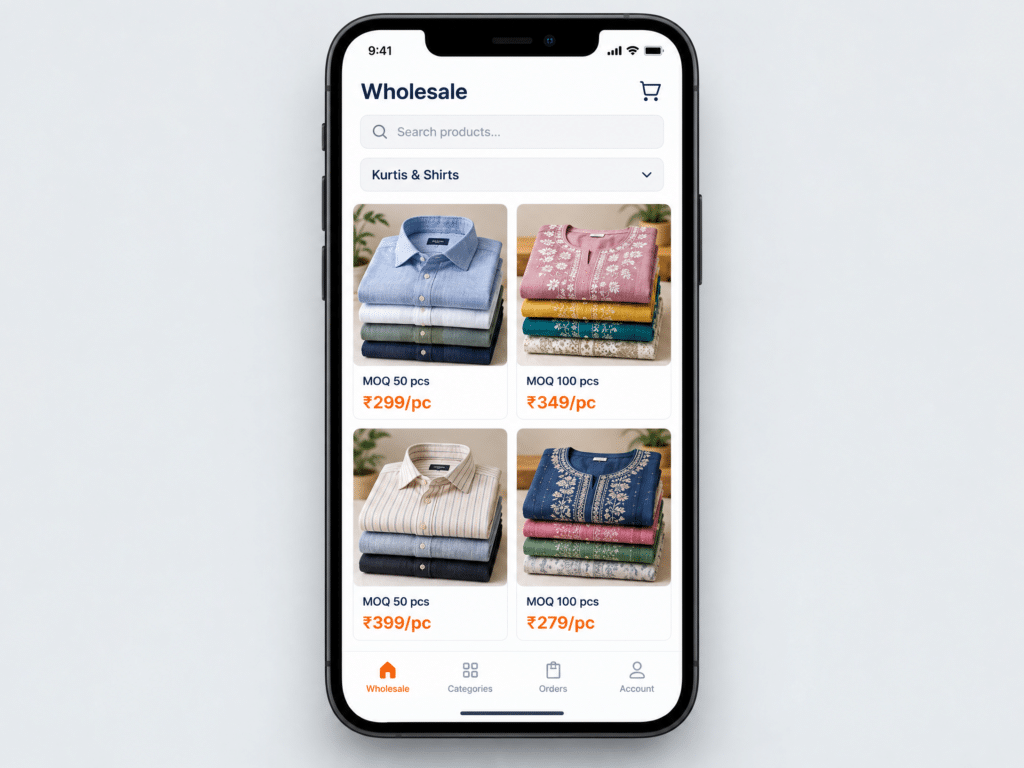
Manufacturers usually set MOQs by style or by lot, while traders often sell sets or mixed sizes. If your budget is small, ask for a “ratio set” (for example S, M, L, XL in one pack) or a mixed-design lot.
Price per piece
Always ask whether the quote includes GST, packing and freight. A lower headline price can end up higher once these are added. Compare quotes on a landed-cost basis, meaning the full cost delivered to your door.
GST: the ₹2,500 rule
Under the rates effective 22 September 2025, eligible apparel with a sale value up to ₹2,500 per piece is taxed at 5%, and apparel above ₹2,500 per piece at 18%. The rate depends on the transaction value, not the printed MRP, so an invoice discount can bring a ₹3,000 item to ₹2,500 and into the 5% slab. Confirm current rates with the CBIC site or your tax adviser, because rules can change.
Garment value per piece | GST rate | Example |
Up to ₹2,500 | 5% | Cotton kurti, t-shirt, kids wear, basic denim |
Above ₹2,500 | 18% | Premium wedding wear, designer lehenga |
5 Mistakes Clothing Buyers Make (and How to Avoid Them)
- Paying 100% in advance to an unverified seller. Use a small trial order first.
- Judging quality from photos only. Always ask for a sample set.
- Ignoring return and damage terms. Get them in writing before you pay.
- Chasing the lowest price. Poor fabric increases your returns, which erases the saving.
- Buying the wrong season. Order winter wear by September and festive wear 8 to 10 weeks before the festival.
How Turoshu Makes Wholesale Clothing Sourcing Easier
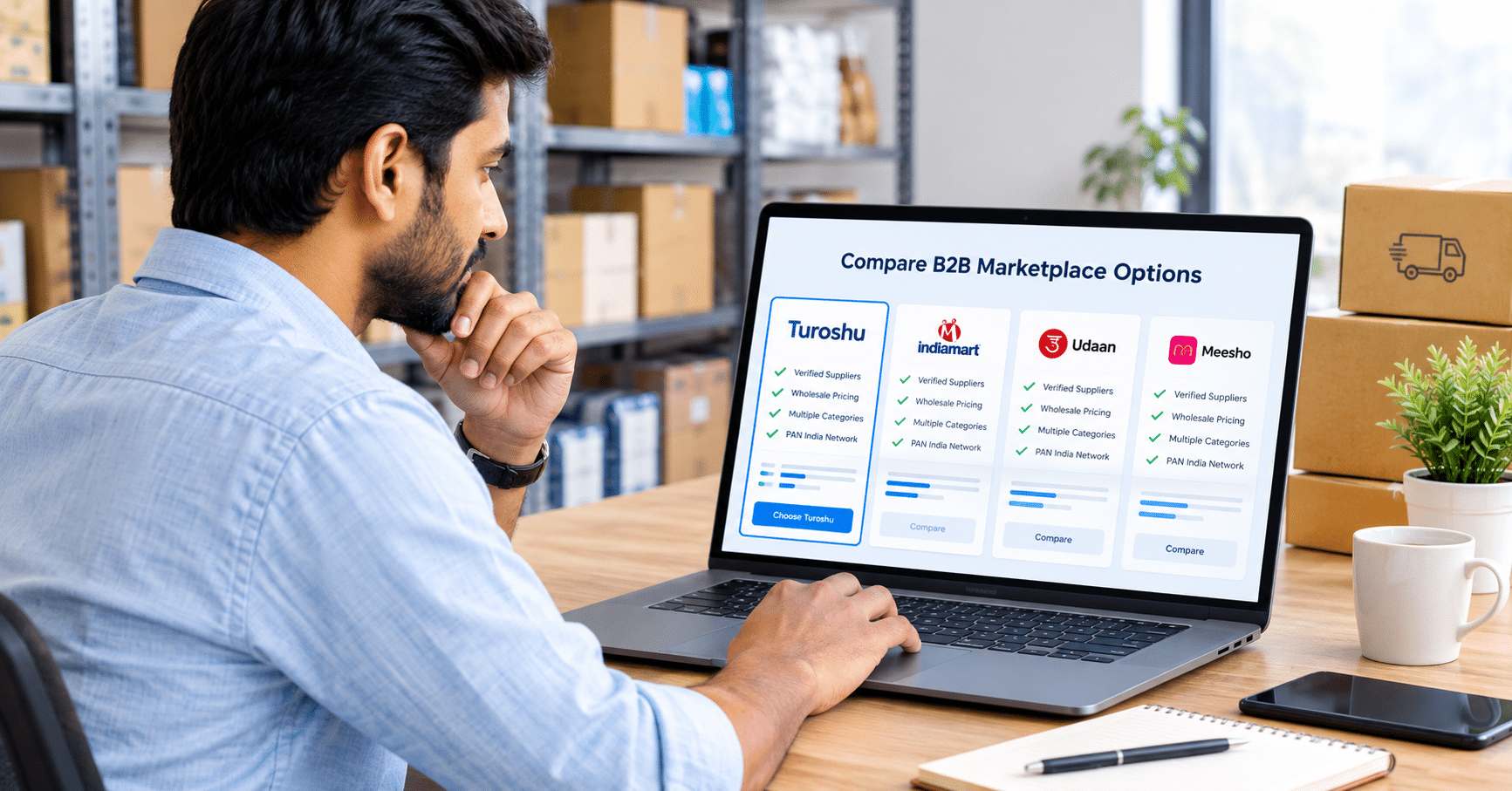
Turoshu is an online wholesale marketplace built for Indian retailers and resellers who want to buy in bulk without visiting five cities.
FREQUENTLY ASKED QUESTIONS
The bottom line
- Choose the hub and product type that match your customers.
- Shortlist three suppliers and run the 7-step vetting checklist.
- Order samples, confirm landed cost with GST, then place a small trial order.
Ready to skip the legwork? Browse verified clothing wholesalers on Turoshu and compare prices and MOQs in one place.