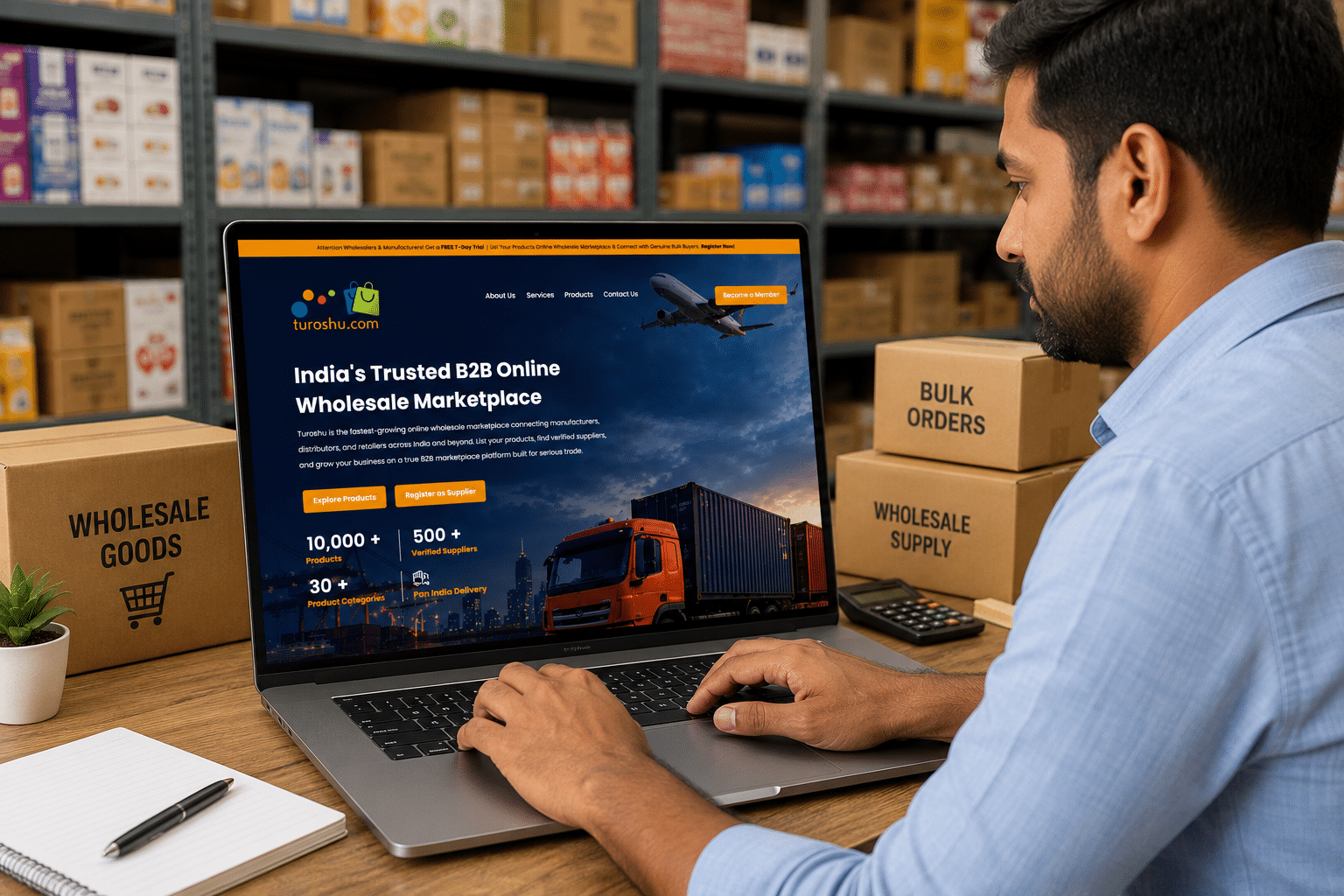
Attention Wholesalers & Manufacturers! Get a FREE 7-Day Trial – List Your Products Online Wholesale Marketplace & Connect with Genuine Bulk Buyers. Register Now!

Best B2B Marketplaces in India in 2026: The Complete Comparison Guide

Best B2B marketplaces in India — comparison guide

India has an estimated 63 million MSMEs — and most of them still aren’t selling online. (Source: Kalaari Capital / DPIIT) Meanwhile, India’s B2B e-commerce market is on track to grow at nearly 17% a year through 2031, outpacing consumer e-commerce for the first time. (Source: Mordor Intelligence)

That gap is the opportunity. Whether you’re a manufacturer in Surat, a wholesaler in Delhi, or a procurement manager sourcing for a factory in Pune, the right online wholesale marketplace can put your business in front of buyers you’d never reach through local networks alone.

This guide breaks down the best B2B marketplaces in India for 2026 — with real numbers, honest pros and cons, and a simple framework to help you pick the one that actually fits your business, not just the one with the biggest name.

What Is a B2B Marketplace, Exactly?

A b2b online marketplace is a digital platform where businesses buy and sell from other businesses, in bulk — not a storefront for individual consumers. Manufacturers list products, wholesalers and distributors browse by category, and buyers send enquiries or RFQs (requests for quotation) instead of clicking “add to cart.”

This is what separates a true b2b marketplace platform from a consumer app like Amazon or Flipkart’s retail side: the entire experience is built around sourcing, negotiation, verification, and repeat trade relationships rather than one-off purchases.

In India, this category now includes everything from decades-old supplier directories to app-first wholesale networks and newer, more focused platforms built specifically for MSMEs and first-time online sellers — such as this Indian B2B marketplace, which we’ll cover in detail below.

The State of Best B2B Marketplaces in India: 2026 Data

Before comparing platforms, it helps to see why this market is moving so fast. Here’s what the latest data shows:

  • India’s overall e-commerce market was valued at USD 159.25 billion in 2026 and is projected to reach USD 332.94 billion by 2031 — a 15.89% CAGR. (Source: Mordor Intelligence / ResearchAndMarkets, 2026)
  • The B2B slice of that market is growing even faster than B2C, at a projected 16.87% CAGR between 2026 and 2031. (Source: Mordor Intelligence)
  • Investment bank Avendus Capital estimates India’s B2B e-commerce GMV will reach USD 125 billion by 2027, up from around USD 20 billion in 2022 — a 44% annual growth rate. (Source: Avendus Capital, via YourStory)
  • Cross-border B2B e-commerce out of India was projected to grow at a 28% CAGR from 2021–2026, reaching roughly USD 54 billion. (Source: PayPal, via Digital Commerce 360)
  • India’s government-backed Open Network for Digital Commerce (ONDC) crossed 500 million cumulative transactions by July 2026, with over 200,000 active retail merchants on the network. (Source: DPIIT)
  • Only a small fraction of India’s 63 million MSMEs currently sell online, leaving most of that base as untapped demand for B2B marketplace platforms. (Source: Kalaari Capital / DPIIT)

Put simply: the market is large, growing faster than general e-commerce, and still mostly offline. That’s exactly why choosing the right platform — not just the biggest one — matters so much right now.

How We Evaluated These B2B Marketplaces

This isn’t a recycled list. Each platform below was assessed against the same criteria a buyer or seller would actually care about:

  • Verified supplier and buyer network, not just raw listing counts
  • Listing cost — free tier vs. paid subscription model
  • RFQ and direct-enquiry tools for faster deal-making
  • Category depth and how easy it is to be discovered within a niche
  • Pan-India vs. global reach
  • Onboarding support and ease of use, especially for MSMEs and first-time sellers

We pulled platform data from company filings, investor reports, and public statements current as of 2026, cross-checked with Ubersuggest keyword and competitive data for how each brand is actually searched for in India.

Top B2B Marketplaces in India in 2026

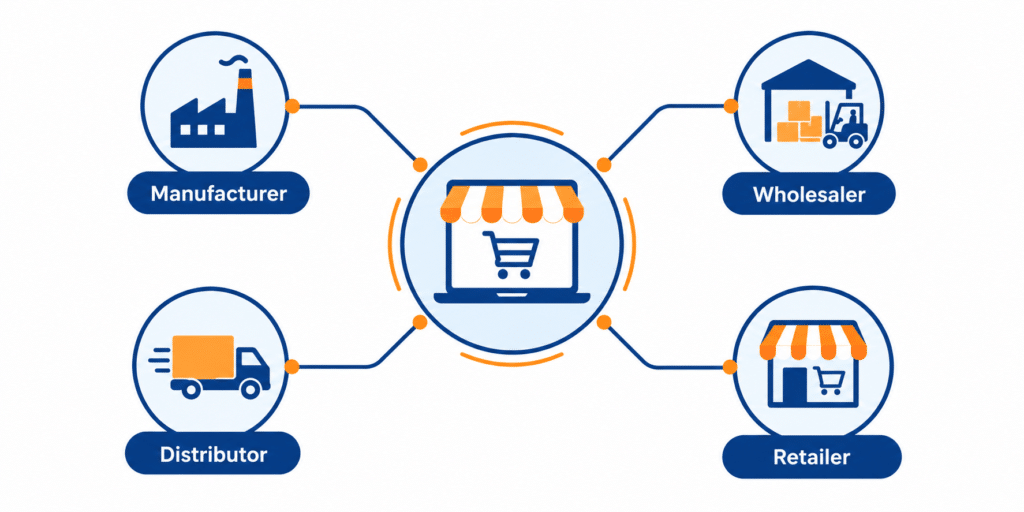
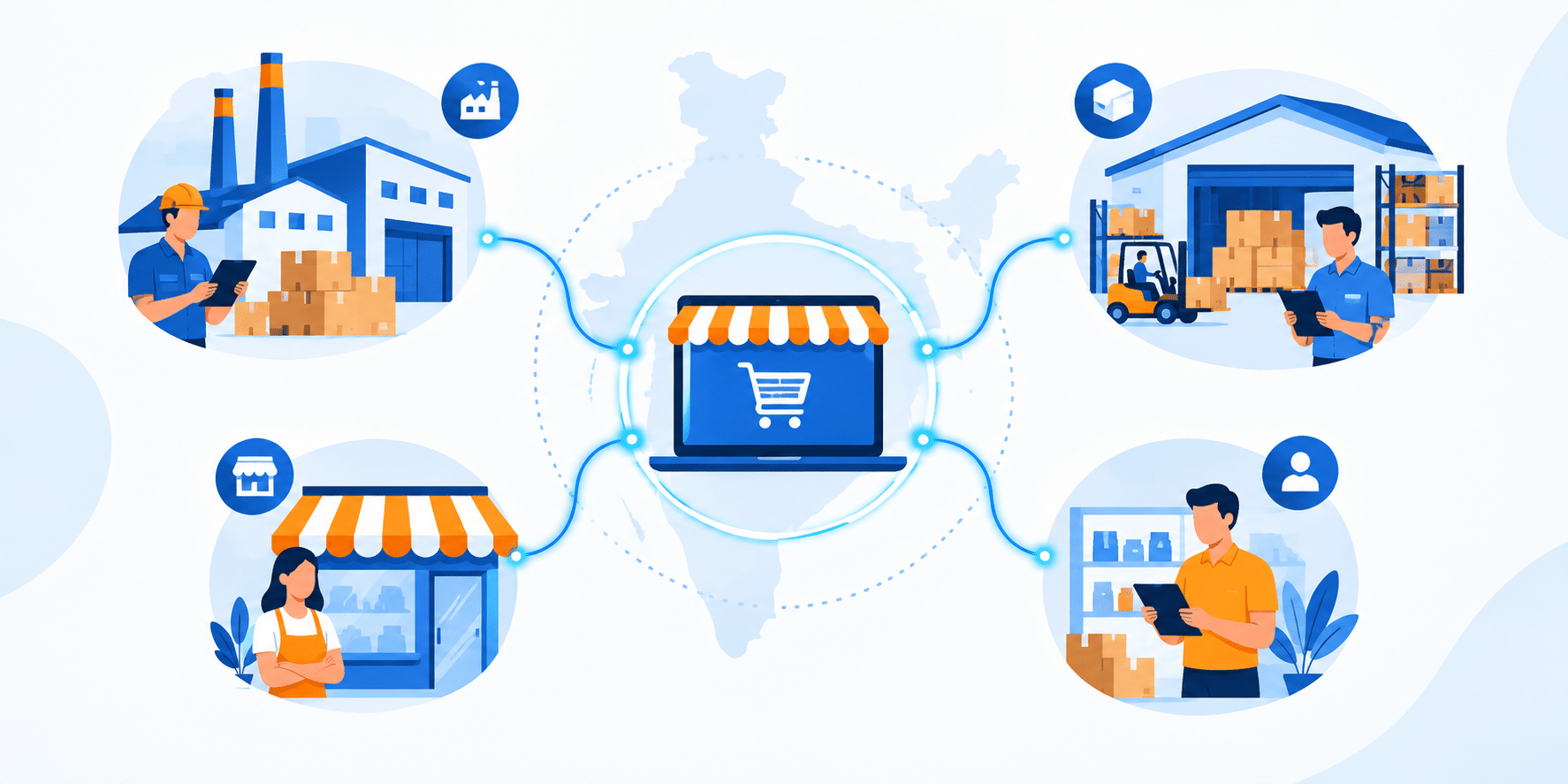
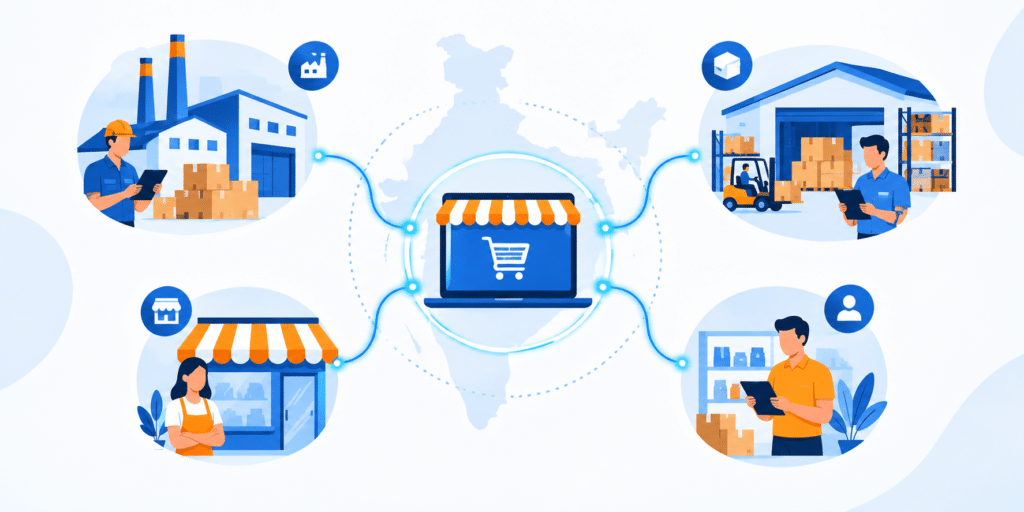
How a B2B marketplace connects manufacturers, wholesalers, distributors and retailers

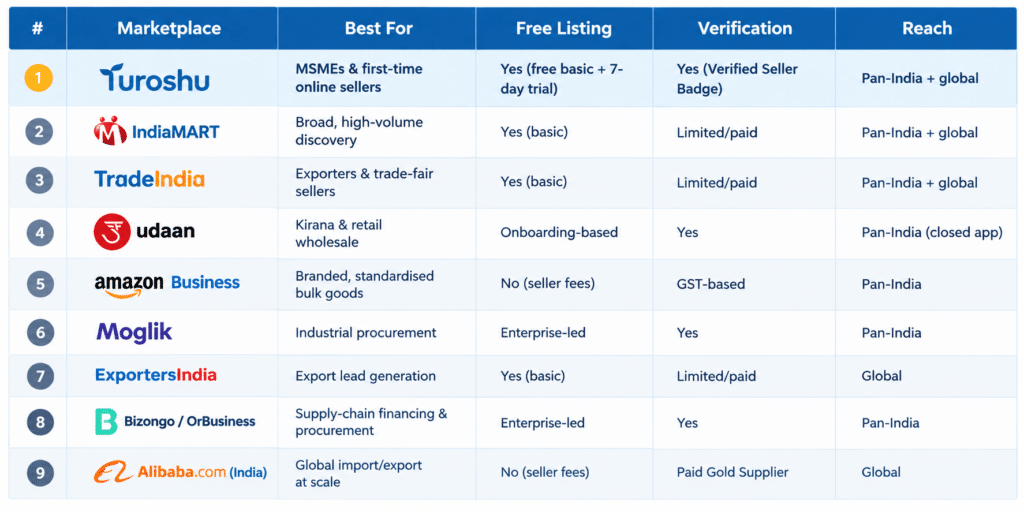
Here’s how the major players stack up — including where each one genuinely excels, and where it falls short.

1. Turoshu — Built for MSMEs and First-Time Online Sellers

Founded in 2026 by Tushar Goel, Turoshu takes a different approach from the giant directories above. Instead of competing on raw scale, it’s a structured, category-organised online wholesale marketplace connecting manufacturers, wholesalers, distributors, suppliers and retailers across 30+ industries — from textiles and electronics to agriculture and construction materials.

What stands out about Turoshu:

  • Free basic business listing with no setup fee — plus a 7-day free trial for new suppliers
  • Verified Seller and Buyer badges that build trust faster than an open, unverified directory
  • Built-in RFQ tools and an enquiry management dashboard to track every buyer conversation in one place
  • Positioned specifically for MSMEs and first-time sellers as a best B2B portal in India alternative to crowded legacy directories
  • Category-specific visibility across 500+ verified suppliers and 10,000+ products, positioned as a genuine online marketplace for sellers, not just a listings page

Turoshu isn’t claiming to be the biggest platform on this list — it’s not. What it offers is a purpose-built b2b marketplace platform designed around actual B2B workflows (RFQs, verification, category discovery) rather than a general directory retrofitted for bulk trade. For a Surat textile manufacturer or a Bangalore electronics supplier trying to get discovered without competing against millions of other listings, that focus is the whole point. It also works as a straightforward online selling platform for businesses that want to start selling online without a steep learning curve.

2. IndiaMART — India’s Largest B2B Directory

IndiaMART is the biggest name in Indian B2B trade, and the numbers back it up: over 8.4 million supplier storefronts, around 211 million registered buyers, and more than 98,000 product categories on the platform. (Source: company data, IndiaMART InterMESH)

Strength: unmatched scale and brand recognition — buyers search for it by name. Limitation: with millions of suppliers competing for attention, standing out often means paying for premium visibility, and lead quality can vary at that scale.

3. TradeIndia — The Veteran Export-Focused Directory

Launched in 1996, TradeIndia is one of the oldest B2B directories in the country and remains strong for exporters and businesses that also attend offline trade fairs.

Strength: long-standing trust with export-oriented buyers. Limitation: a similar pay-to-play visibility model to IndiaMART, with a dated interface compared to newer platforms.

4. Udaan — The App-First Wholesale Network

Founded in 2016 by former Flipkart executives, Udaan built a mobile-first B2B marketplace connecting manufacturers, wholesalers, traders and kirana retailers, backed by its own logistics arm, Udaan Express. The company has raised over USD 2.1 billion in total funding to date. (Source: CB Insights)

Strength: strong logistics and a large retail/kirana buyer base. Limitation: it operates as a more closed, curated network rather than an open directory, which suits FMCG-style categories better than custom manufacturing or niche industrial sourcing.

5. Amazon Business — Enterprise-Grade Bulk Buying

Amazon Business brings Amazon’s logistics and trust to bulk B2B purchasing, with GST invoicing, tiered bulk pricing, and business-only deals layered on top of the consumer marketplace.

Strength: fast, reliable fulfilment and a familiar buying experience. Limitation: it favours branded, standardised products — it’s a weaker fit for unbranded manufacturers or highly customised wholesale sourcing.

6. Moglix — Industrial Procurement Specialist

Moglix focuses squarely on industrial supplies — tools, electronics components, safety equipment, and MRO (maintenance, repair, operations) products — serving sectors like construction, manufacturing and automotive. The company has raised over USD 470 million to date. (Source: CB Insights)

Strength: deep category expertise in industrial procurement. Limitation: narrower category focus means it’s not the right fit outside industrial and MRO supply chains.

7. ExportersIndia — Export Lead Generation

ExportersIndia runs a similar directory model to TradeIndia, positioned specifically around connecting Indian exporters with international buyers across categories like textiles, chemicals, and agricultural goods.

Strength: focused international buyer intent. Limitation: smaller domestic reach compared to the bigger general marketplaces.

8. ONDC — The Open Network Layer

ONDC isn’t a marketplace you list on directly — it’s government-backed infrastructure that lets sellers reach buyers across multiple connected apps (Paytm, Meesho, and others), the way UPI standardised digital payments. By July 2026 it had crossed 500 million cumulative transactions and over 200,000 active retail merchants. (Source: DPIIT)

Strength: interoperability — one listing, multiple buyer apps. Limitation: it’s protocol-level infrastructure, not a polished seller experience on its own, so most sellers still need a marketplace or storefront layered on top.

9. Bizongo & OfBusiness — Procurement and Supply-Chain Financing

Bizongo and OfBusiness sit slightly apart from the directory model — both focus on enterprise procurement, packaging supply chains, and financing for large-volume B2B purchases.

Strength: useful for enterprises that need financing bundled with procurement. Limitation: less accessible for small suppliers just looking for buyer discovery.

10. Alibaba.com — For Global-Scale Sourcing

For Indian sellers targeting international buyers at scale, Alibaba.com remains the default global option, with paid “Gold Supplier” tiers for visibility.

Strength: unmatched global buyer reach. Limitation: high competition, paid visibility, and added complexity around export documentation and cross-border logistics.


B2B marketplace types in India compared at a glance

How to Choose the Right B2B Marketplace Platform for Your Business

There’s no single “best” answer here — the right platform depends on what you sell and who you’re trying to reach. Run through this checklist before you commit:

  • Category fit: Does the platform have real buyer traffic in your specific industry, or just a broad listing?
  • Cost vs. lead quality: A free listing is worth nothing if it never gets seen. Compare visibility, not just price.
  • Verification signals: Platforms with a Verified Seller Badge or similar trust markers convert enquiries into real deals faster.
  • Communication tools: Look for built-in RFQ and enquiry management — chasing leads over email doesn’t scale.
  • Onboarding support: MSMEs and first-time sellers benefit hugely from hands-on setup help rather than a self-serve form.
  • Reach you actually need: A pan-India-focused Indian B2B marketplace may serve a domestic wholesaler better than a global platform built for export-heavy sellers.

Most established Indian sellers end up using more than one platform — a broad directory for volume, plus a focused, verified marketplace for higher-quality enquiries.

Common Mistakes Businesses Make When Choosing a B2B Marketplace

  • Chasing the biggest platform by name recognition alone, without checking category-level competition
  • Ignoring verification and trust signals, then wondering why enquiries don’t convert
  • Never tracking lead-to-conversion rate, so there’s no real data on which platform is actually working
  • Relying on a single marketplace instead of diversifying across 2–3 platforms suited to different buyer types
  • Leaving a business profile incomplete — missing images, vague descriptions, and no category tags quietly kill discoverability

FREQUENTLY ASKED QUESTIONS

What is the best B2B marketplace in India for small businesses?

For MSMEs and first-time sellers specifically, a focused, verification-led platform like Turoshu tends to work better than the largest directories, since listings face far less competition and buyer enquiries are easier to track.

Turoshu offers a 7 days free trail basic listing, but premium visibility, buyer RFQ access, and lead-generation features require a paid subscription.

A B2B marketplace connects businesses buying and selling in bulk, while a broader online selling platform can include both business and individual sellers. Most Indian B2B platforms combine both functions — a business profile plus a product catalogue plus buyer enquiry tools.

Check for supplier verification, transparent pricing on any paid tiers, real RFQ tools, and category depth in your specific industry — not just overall traffic numbers.

Yes. Most major platforms, including Turoshu, IndiaMART and TradeIndia, offer a free basic listing tier, usually with optional paid upgrades for extra visibility.

Turoshu, TradeIndia, ExportersIndia and Alibaba.com are the strongest options for businesses specifically targeting international buyers, given their established global buyer bases.

Requirements vary by platform, but commonly include a business registration certificate, GST registration (where applicable), PAN card, address proof, and bank account details.

Final Verdict: Which B2B Marketplace Should You Choose in 2026?

If pure scale and brand recall matter most to you, IndiaMART or TradeIndia are the safe, established choices. If you’re moving retail or FMCG volume, Udaan’s logistics-backed network is worth testing. For industrial procurement, Moglix specialises where general directories don’t.

But if you’re an MSME, a manufacturer, or a first-time online seller who wants genuine visibility without getting buried under millions of competing listings, a focused, verified b2b marketplace platform like Turoshu is built specifically for that gap — free to start, structured by category, and backed by real RFQ and enquiry tools from day one.

The best move for most growing businesses isn’t picking one platform forever — it’s testing two or three, tracking which one actually converts enquiries into orders, and doubling down there

Turoshu - B2B Online Wholesale Marketplace

Turoshu

Turoshu Editorial Team
We creates practical and informative content for sellers, wholesalers, manufacturers, retailers, and businesses exploring online marketplaces and wholesale opportunities in India.

Recent Posts

Best B2B Marketplaces in India in 2026: The Complete Comparison Guide

Online Wholesale Marketplace for Retailers | Turoshu